

Working with Stewart was a pleasure. He knows everything there is to know about trees and provided prompt useful guidance for the development of our site. Highly recommend.
Keith Edwards, Devon
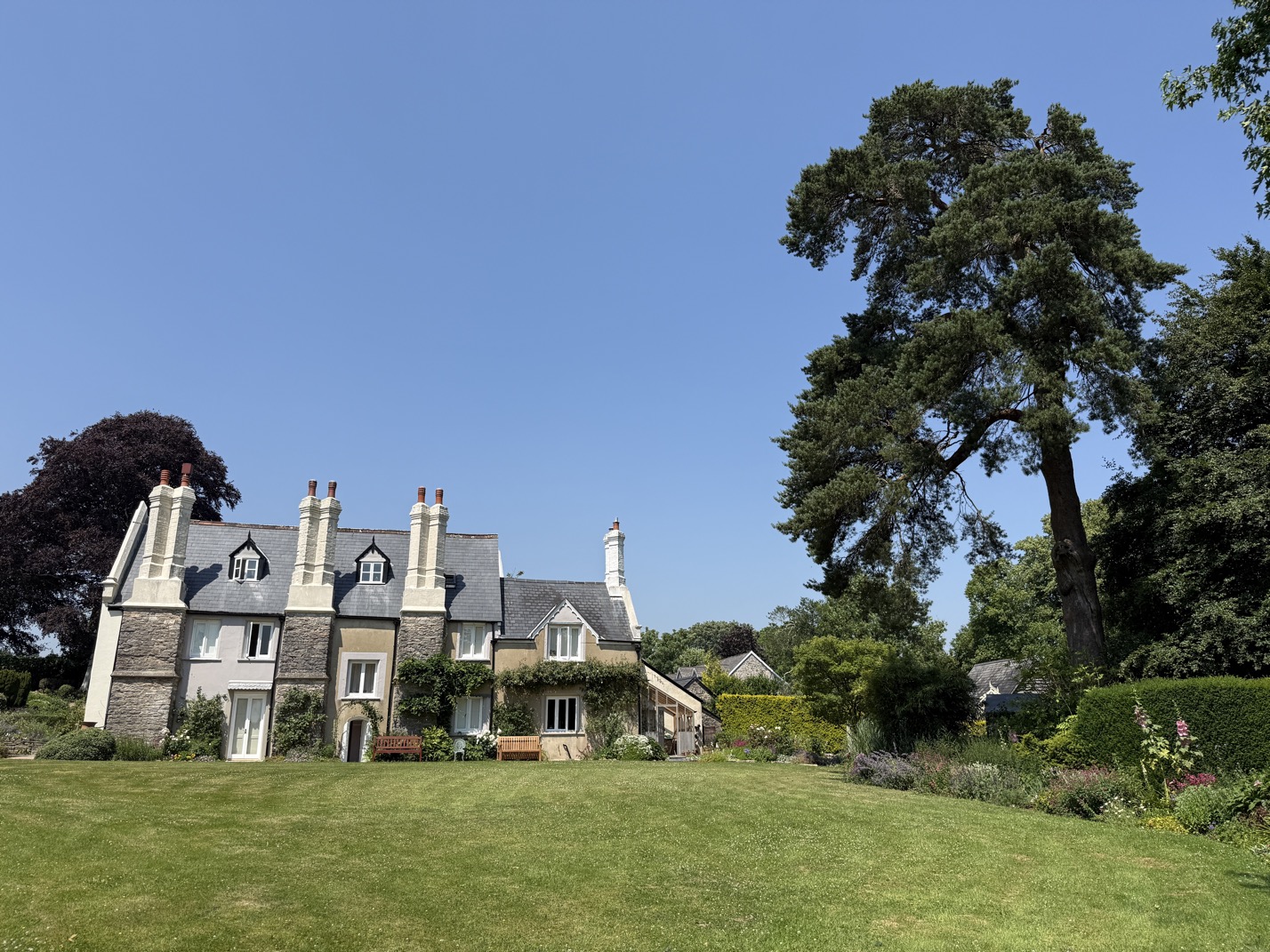
Earlier this summer, we were asked to look at the large Scots Pine (Pinus sylvestris) that is growing close to this listed home. The owner really likes the tree and wants to do what they can to keep it healthy.
The Quantified Tree Risk Assessment (QTRA) method we use is designed to do as little as possible, letting the tree’s natural defences handle any threats or decay. That said, we will suggest tree surgery when it is needed to protect the tree owners and their property, or if the tree is overhanging public spaces or neighbouring properties.
Our clients often say that our survey has saved them money on tree surgery because we have let their trees grow and do well without doing anything they do not need. That is why we are an independent Arboricultural Consultancy that does not engage in tree surgery work; by staying independent, we only act in our clients’ best interests.
The tree had a big hole in its main trunk high up (large decay pocket on the main stem), which we thought was a serious issue. It could snap and potentially hit the corner of the building or fall onto the garden next to the house. But after calculating the risk, we decided it was okay and didn’t need to do anything. So, he didn’t need to hire a tree surgeon, which saved our client money.
Bodmin, Bude, Callington, Camborne, Camelford, Falmouth, Fowey, Hayle, Helston, Launceston, Liskeard, Looe, Lostwithiel, Marazion, Newquay, Padstow, Penryn, Penzance, Redruth, Saltash, St Austell, St Ives, Torpoint, Truro, Wadebridge and all surrounding areas.
Ashburton, Axminster, Barnstaple, Bideford, Brixham, Braunton, Brixham, Chagford, Crediton, Cullompton, Dawlish, Dartmouth, Exmouth, Exeter, Great Torrington, Holsworthy, Honiton, Ilfracombe, Kingsbridge, Lynton, Lynmouth, Moretonhampstead, Newton Abbot, North Tawton, Okehampton, Paignton, Plymouth, Salcombe, Seaton, Sidmouth, South Brent, South Molton, Tavistock, Teignmouth, Tiverton, Torquay, Totnes and all surrounding areas.
Axbridge, Bath, Bridgwater, Bruton, Burnham-on-Sea, Castle Cary, Chard, Cheddar, Clevedon, Crewkerne, Dulverton, Frome, Glastonbury, Highbridge, Ilminster, Keynsham, Langport, Minehead, Nailsea, Portishead, Radstock, Shepton Mallet, Somerton, South Petherton, Street, Taunton, Watchet, Wellington, Wells, Weston-super-Mare, Williton, Wincanton, Yeovil
Beaminster, Blandford Forum, Bournemouth, Bridport, Christchurch, Dorchester, Ferndown, Gillingham, Lyme Regis, Poole, Shaftesbury, Sherborne, Stalbridge, Sturminster Newton, Swanage, Verwood, Wareham, Weymouth, Wimborne Minster and all surrounding areas.
If your site has trees on or near the boundary, most Local Authorities require a BS5837 survey before validating a planning application. This applies to extensions, new builds, conversions, access changes and larger developments. The survey identifies tree constraints and ensures your design complies with planning policy.
A full BS5837 package typically includes:
Tree survey schedule
Tree constraints plan (TCP)
Arboricultural Impact Assessment (AIA)
Tree Protection Plan (TPP)
Arboricultural Method Statement (AMS)
Site monitoring (if required) These documents support your planning application from design through to construction.
Costs vary depending on site size, number of trees and the level of reporting required. BS5837 surveys are typically more detailed than safety inspections. We provide clear, fixed‑fee quotes before any work begins.
Absolutely. We regularly work alongside architects, planning consultants, developers and Local Authorities to resolve tree‑related constraints and support successful planning outcomes.
A tree risk assessment evaluates the likelihood of tree failure and the potential consequences. It helps landowners manage risk responsibly and proportionately. We use QTRA‑based principles to ensure assessments are evidence‑led and cost‑effective.
Inspection frequency depends on tree condition, location and usage of the surrounding area. Typical re‑inspection cycles range from 1–5 years. We provide tailored recommendations based on risk level.
Yes. We assist with:
TPO applications
Objections
Works to trees in Conservation Areas
Advice on protected tree management, our reports are designed to meet Local Authority requirements.
Yes. We are a fully independent consultancy and not linked to any tree surgery company. Our recommendations are always in the best interests of you and your trees.
Yes, we have Professional Indemnity insurance to £2,000,000 and Public liability insurance to £2,000,000.
We operate throughout Devon, Cornwall, Somerset and Dorset and sometimes further afield. Get in touch to see if we can help in your area.
Working with Stewart was a pleasure. He knows everything there is to know about trees and provided prompt useful guidance for the development of our site. Highly recommend.