

Working with Stewart was a pleasure. He knows everything there is to know about trees and provided prompt useful guidance for the development of our site. Highly recommend.
Keith Edwards, Devon
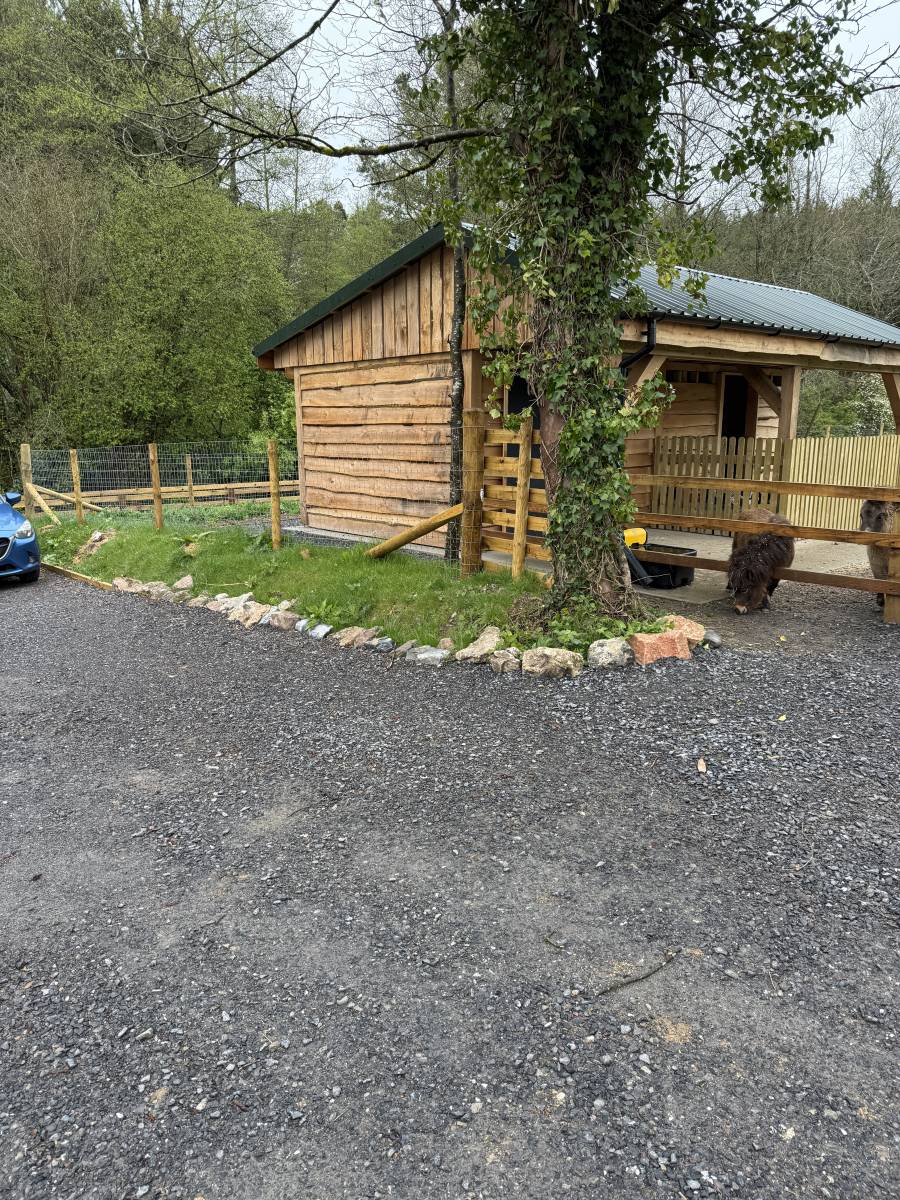
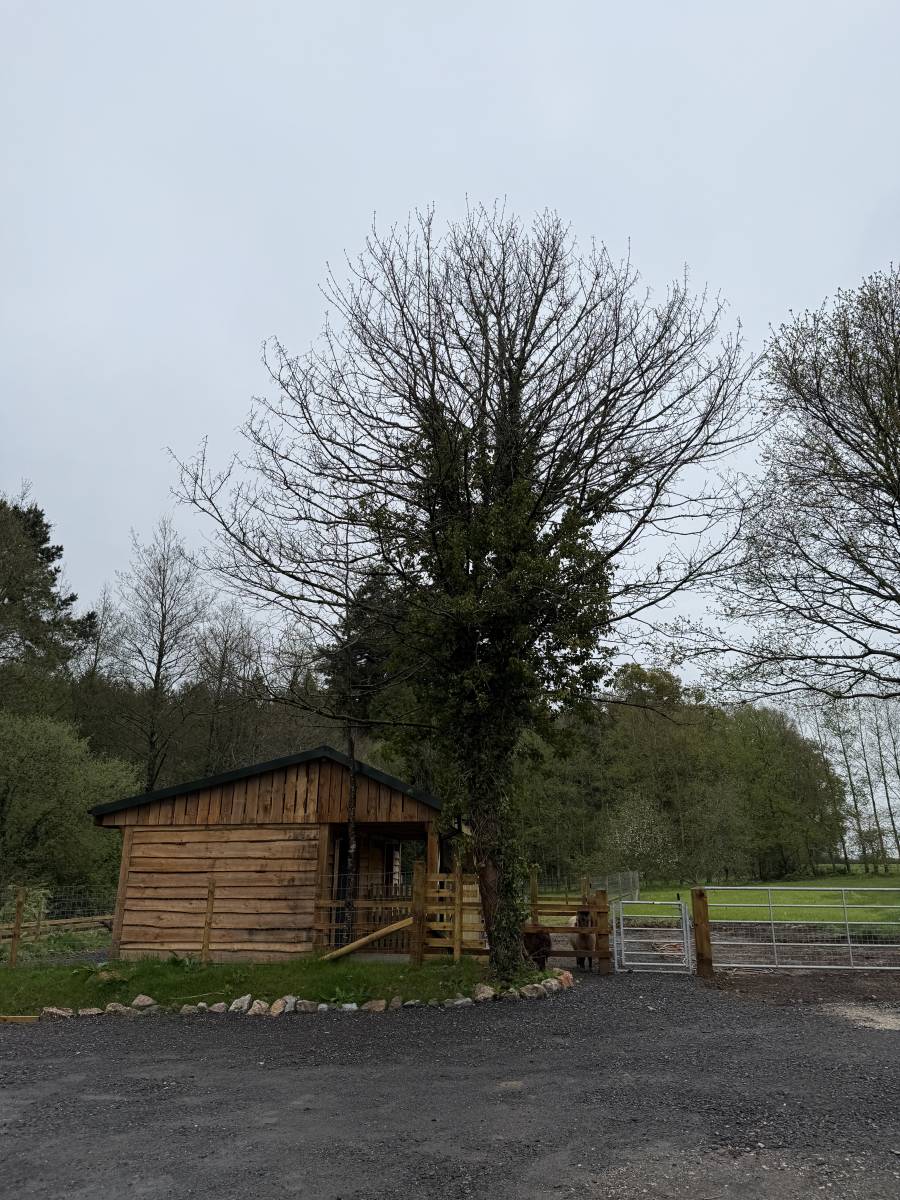
Great visit for Darttree Consultancy in April 2026 to a client in the beautiful South Hams area of Devon. They had installed a field shelter as a stable for their miniature ponies. The local planning authority (South Hams Distict Council) requested a retrospective Tree Constraints Plan. (TCP)

A Tree Constraints Plan (TCP) is a technical, industry compliant document, designed to map trees above-ground (canopy) and below-ground (root) constraints. It guides layout design by highlighting the Root Protection Area (RPA) and tree quality, ensuring valuable trees are protected and that developers avoid costly redesigns or planning refusals and problems. The Root Protection Area is a calculated area surrounding a tree that must be kept free from excavation to protect root health.
At first sight, it looked as thought the trees had been left in a worse position that before following installation of the stable, due to a concrete raft foundation for the pony shelter very close to two of the trees and within the tree rooting area. However, our surveyor investigation and discussions with the client, revealed that before the development, the trees were growing very close to agricultural concrete access road which was prohibiting root growth and adversely affecting tree health. The development has actually improved the trees rooting conditions by removing the concrete block to air and water and providing a larger area for roots to exploit.
We are currently writing up the report for our client to submit to SHDC to assist with the planning condition. It was great fun saying hello to the little ponies as well!
Bodmin, Bude, Callington, Camborne, Camelford, Falmouth, Fowey, Hayle, Helston, Launceston, Liskeard, Looe, Lostwithiel, Marazion, Newquay, Padstow, Penryn, Penzance, Redruth, Saltash, St Austell, St Ives, Torpoint, Truro, Wadebridge and all surrounding areas.
Ashburton, Axminster, Barnstaple, Bideford, Brixham, Braunton, Brixham, Chagford, Crediton, Cullompton, Dawlish, Dartmouth, Exmouth, Exeter, Great Torrington, Holsworthy, Honiton, Ilfracombe, Kingsbridge, Lynton, Lynmouth, Moretonhampstead, Newton Abbot, North Tawton, Okehampton, Paignton, Plymouth, Salcombe, Seaton, Sidmouth, South Brent, South Molton, Tavistock, Teignmouth, Tiverton, Torquay, Totnes and all surrounding areas.
Axbridge, Bath, Bridgwater, Bruton, Burnham-on-Sea, Castle Cary, Chard, Cheddar, Clevedon, Crewkerne, Dulverton, Frome, Glastonbury, Highbridge, Ilminster, Keynsham, Langport, Minehead, Nailsea, Portishead, Radstock, Shepton Mallet, Somerton, South Petherton, Street, Taunton, Watchet, Wellington, Wells, Weston-super-Mare, Williton, Wincanton, Yeovil
Beaminster, Blandford Forum, Bournemouth, Bridport, Christchurch, Dorchester, Ferndown, Gillingham, Lyme Regis, Poole, Shaftesbury, Sherborne, Stalbridge, Sturminster Newton, Swanage, Verwood, Wareham, Weymouth, Wimborne Minster and all surrounding areas.
If your site has trees on or near the boundary, most Local Authorities require a BS5837 survey before validating a planning application. This applies to extensions, new builds, conversions, access changes and larger developments. The survey identifies tree constraints and ensures your design complies with planning policy.
A full BS5837 package typically includes:
Tree survey schedule
Tree constraints plan (TCP)
Arboricultural Impact Assessment (AIA)
Tree Protection Plan (TPP)
Arboricultural Method Statement (AMS)
Site monitoring (if required) These documents support your planning application from design through to construction.
Costs vary depending on site size, number of trees and the level of reporting required. BS5837 surveys are typically more detailed than safety inspections. We provide clear, fixed‑fee quotes before any work begins.
Absolutely. We regularly work alongside architects, planning consultants, developers and Local Authorities to resolve tree‑related constraints and support successful planning outcomes.
A tree risk assessment evaluates the likelihood of tree failure and the potential consequences. It helps landowners manage risk responsibly and proportionately. We use QTRA‑based principles to ensure assessments are evidence‑led and cost‑effective.
Inspection frequency depends on tree condition, location and usage of the surrounding area. Typical re‑inspection cycles range from 1–5 years. We provide tailored recommendations based on risk level.
Yes. We assist with:
TPO applications
Objections
Works to trees in Conservation Areas
Advice on protected tree management, our reports are designed to meet Local Authority requirements.
Yes. We are a fully independent consultancy and not linked to any tree surgery company. Our recommendations are always in the best interests of you and your trees.
Yes, we have Professional Indemnity insurance to £2,000,000 and Public liability insurance to £2,000,000.
We operate throughout Devon, Cornwall, Somerset and Dorset and sometimes further afield. Get in touch to see if we can help in your area.
Working with Stewart was a pleasure. He knows everything there is to know about trees and provided prompt useful guidance for the development of our site. Highly recommend.