

Working with Stewart was a pleasure. He knows everything there is to know about trees and provided prompt useful guidance for the development of our site. Highly recommend.
Keith Edwards, Devon

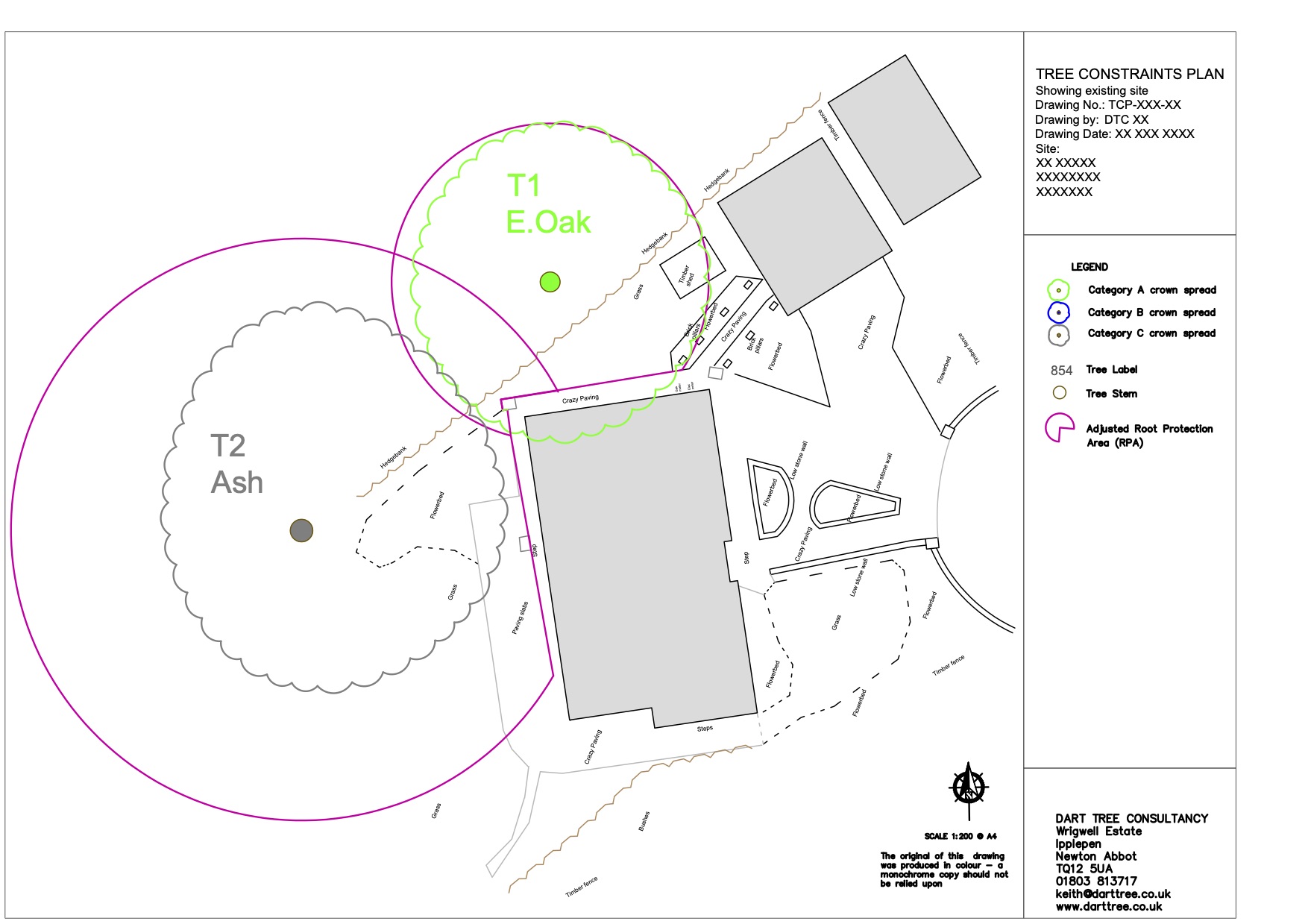
Tree Constraints Plans (TCP) Above‑ and below‑ground constraints, including shading and root protection areas.
Arboricultural Impact Assessments (AIA) Clear assessment of how your development affects existing and retained trees.
Tree Protection Plans (TPP) Construction‑ready plans showing CEZ fencing, protection measures and mitigation.
Arboricultural Method Statements Practical, contractor‑friendly instructions for working safely around trees.
Site Monitoring Visits Required by many Local Authorities to discharge planning conditions.
Discharge of Arboricultural Planning Conditions Fast, reliable sign‑off to keep your project moving
Engaging us early in your project helps you avoid costly redesigns and planning delays.
We can:
Carry out pre‑purchase checks
Advise on the development potential of a plot
Work directly from your topographical survey
Identify constraints before architects and engineers begin detailed design
This early clarity prevents surprises and ensures your design team works from accurate, tree‑related data from day one.
Tree‑related issues are one of the most common causes of planning delays. A clear BS5837 survey ensures:
Your architect designs with accurate tree data
The Local Authority receives everything they need first time
You avoid objections, redesigns and unexpected constraints
Your project progresses smoothly from concept to construction
Engaging us early in your project helps you avoid costly redesigns and planning delays.
We can:
Carry out pre‑purchase checks
Advise on the development potential of a plot
Work directly from your topographical survey
Identify constraints before architects and engineers begin detailed design
This early clarity prevents surprises and ensures your design team works from accurate, tree‑related data from day one.
Bodmin, Bude, Callington, Camborne, Camelford, Falmouth, Fowey, Hayle, Helston, Launceston, Liskeard, Looe, Lostwithiel, Marazion, Newquay, Padstow, Penryn, Penzance, Redruth, Saltash, St Austell, St Ives, Torpoint, Truro, Wadebridge and all surrounding areas.
Ashburton, Axminster, Barnstaple, Bideford, Brixham, Braunton, Brixham, Chagford, Crediton, Cullompton, Dawlish, Dartmouth, Exmouth, Exeter, Great Torrington, Holsworthy, Honiton, Ilfracombe, Kingsbridge, Lynton, Lynmouth, Moretonhampstead, Newton Abbot, North Tawton, Okehampton, Paignton, Plymouth, Salcombe, Seaton, Sidmouth, South Brent, South Molton, Tavistock, Teignmouth, Tiverton, Torquay, Totnes and all surrounding areas.
Axbridge, Bath, Bridgwater, Bruton, Burnham-on-Sea, Castle Cary, Chard, Cheddar, Clevedon, Crewkerne, Dulverton, Frome, Glastonbury, Highbridge, Ilminster, Keynsham, Langport, Minehead, Nailsea, Portishead, Radstock, Shepton Mallet, Somerton, South Petherton, Street, Taunton, Watchet, Wellington, Wells, Weston-super-Mare, Williton, Wincanton, Yeovil
Beaminster, Blandford Forum, Bournemouth, Bridport, Christchurch, Dorchester, Ferndown, Gillingham, Lyme Regis, Poole, Shaftesbury, Sherborne, Stalbridge, Sturminster Newton, Swanage, Verwood, Wareham, Weymouth, Wimborne Minster and all surrounding areas.
If your site has trees on or near the boundary, most Local Authorities require a BS5837 survey before validating a planning application. This applies to extensions, new builds, conversions, access changes and larger developments. The survey identifies tree constraints and ensures your design complies with planning policy.
A full BS5837 package typically includes:
Tree survey schedule
Tree constraints plan (TCP)
Arboricultural Impact Assessment (AIA)
Tree Protection Plan (TPP)
Arboricultural Method Statement (AMS)
Site monitoring (if required) These documents support your planning application from design through to construction.
Costs vary depending on site size, number of trees and the level of reporting required. BS5837 surveys are typically more detailed than safety inspections. We provide clear, fixed‑fee quotes before any work begins.
Absolutely. We regularly work alongside architects, planning consultants, developers and Local Authorities to resolve tree‑related constraints and support successful planning outcomes.
A tree risk assessment evaluates the likelihood of tree failure and the potential consequences. It helps landowners manage risk responsibly and proportionately. We use QTRA‑based principles to ensure assessments are evidence‑led and cost‑effective.
Inspection frequency depends on tree condition, location and usage of the surrounding area. Typical re‑inspection cycles range from 1–5 years. We provide tailored recommendations based on risk level.
Yes. We assist with:
TPO applications
Objections
Works to trees in Conservation Areas
Advice on protected tree management, our reports are designed to meet Local Authority requirements.
Yes. We are a fully independent consultancy and not linked to any tree surgery company. Our recommendations are always in the best interests of you and your trees.
Yes, we have Professional Indemnity insurance to £2,000,000 and Public liability insurance to £2,000,000.
We operate throughout Devon, Cornwall, Somerset and Dorset and sometimes further afield. Get in touch to see if we can help in your area.
Working with Stewart was a pleasure. He knows everything there is to know about trees and provided prompt useful guidance for the development of our site. Highly recommend.